
Dental implants
Dental implants in Helsby and Frodsham
Missing a tooth, or wearing a denture that slips when you eat? A dental implant anchors a new tooth in your jaw, and implants can also hold a denture in place. Many people leave this for years. Whenever you feel ready, we start from where your mouth is today.
Your first step is a private consultation with Dr Aiman Sinjab, who leads implant treatment here. He examines your teeth and gums, takes a 3D scan of your jaw, and tells you which options would work for you and what your treatment would cost. Implant treatment is subject to a dental assessment, and individual results vary.

What it is
What a dental implant is made of
An implant replaces the root of a missing tooth. It has three parts, which go in over several stages rather than all at once.
-
The implant
A small post, usually made from titanium, placed in the jawbone where the root of the missing tooth used to be. The bone grows onto it over the following months, before the new tooth goes on top.
-
The abutment
A small connector fitted to the implant once the bone has grown onto it. It sits at gum level and holds the new tooth in position.
-
The new tooth
The part you see. Depending on how many teeth are missing, this may be a single crown, a bridge, or attachments that hold a denture in place.
Your neighbouring teeth stay as they are. A conventional bridge is held by the teeth either side of the gap, which are filed down to carry it. An implant crown stands on its own, so those teeth are usually left untouched.
Treatment options
Ways implants can be used
Which of these suits you depends on how many teeth are missing, the health of your gums and the bone in your jaw. Dr Sinjab will explain which are open to you once he has examined you and seen the scan.
-
One missing tooth
A single implant with a crown
One implant carries one crown, in the gap your tooth left. The crown is made to match the shade and shape of the teeth beside it.
-
Several missing teeth
An implant-supported bridge
A bridge on two or more implants can replace several teeth in a row, without an implant for every tooth. How many implants you need, and where they go, comes out of the planning.
-
A denture that moves
An implant-retained denture
Implants with small clip-in attachments hold your denture more securely. You still take it out to clean it.
-
Most or all teeth missing
Fixed full-arch treatment
Where most or all of the teeth in your upper or lower jaw are missing or failing, a full row of fixed teeth can be held on several implants. It stays in, so there is nothing to take out at night.
Planning your treatment
How we assess and plan implant treatment
Four things shape what Dr Sinjab recommends, and your consultation looks at each of them.
Implants may suit you if
- You are missing one tooth and would like a fixed replacement
- The teeth either side of a gap are healthy and you would like to leave them untouched
- Your denture moves when you eat or speak
- A tooth needs to come out and you would like to plan its replacement beforehand
What your consultation covers
- Your teeth and gums. Any decay, gum disease or infection is usually treated first
- The bone at the site and the position of nearby nerves and sinuses, shown on the scan
- Your general health and any medicines you take, since both can affect planning and healing
- Whether you smoke, because smoking can affect healing and the long-term health of an implant
If the scan shows the bone needs building up, your plan can include that first. A bone graft adds bone where it is thin, and a sinus lift adds height in the upper back jaw.
The process
What implant treatment involves
Treatment runs over several months, and most of that time is the bone healing around the implant while you get on with life. You are in the chair a handful of times.
-
Assessment and scan
Dr Sinjab checks your teeth, gums and bite, goes through your medical history, and takes a CBCT scan, a 3D X-ray of your jaw, to see how much bone there is where the implant would go.
-
Your plan
He explains what he recommends, the other options open to you, the stages and the risks, and answers your questions before you decide anything.
-
Groundwork, if you need it
Some mouths need something done first: gum treatment, removing a failing tooth, or building up thin bone. Any of this is part of your plan from the start.
-
Placing the implant
He numbs the area with local anaesthetic and places the implant in the jawbone. A stitch or two may hold the gum while it heals.
-
Healing
The bone grows onto the implant over a few months. If the gap shows when you smile, ask about a temporary tooth to wear in the meantime.
-
Fitting the tooth
Once the implant is firm, he takes impressions or a scan, the laboratory makes your crown, bridge or denture attachment, and he fits it.
Dr Sinjab gives you your own timings at the planning stage, once he has seen the scan. Healing time depends on the site, the bone and your general health. Once your new tooth is in, it is checked at your regular check-ups along with the rest of your mouth.
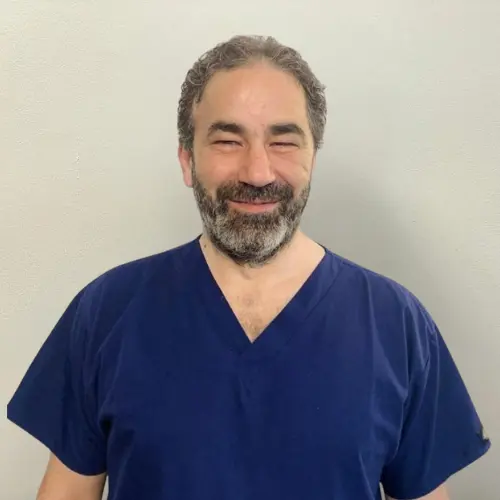
Your implant dentist
Dr Aiman Sinjab
Implant and cosmetic dentist
Implant treatment here is his. He assesses you, reads the scan, plans the treatment and places the implants himself, so the person you meet at the start is the person doing the work.
Before talking about replacing a tooth, he looks at whether it can be saved, and he will tell you plainly which he recommends and why.
Qualifications. Lek Dent, Katowice, Poland, 1996. Postgraduate training, UCL London. GDC 107357
What it costs
How your implant price is set
Your implant price is set at your consultation, because two people missing one tooth can need quite different treatment.
What your price depends on
- How many teeth you are replacingAnd whether each one needs its own implant
- The bone you have to work withThe scan shows this. Thin or shallow bone may need building up first, which is priced separately
- Where in the mouth they goThe upper back jaw sometimes needs extra work, because of the sinus above it
- What goes on topA single crown, a bridge, or attachments to hold a denture
- Anything that needs doing firstA failing tooth to remove, or gum disease to settle
- A temporary tooth in the meantimeIf you would like one, it is priced as its own item
Before you commit
A written plan to take home
After your consultation, Dr Sinjab gives you a written plan with what he recommends, the cost of each stage and the total. You take it home and decide in your own time, and treatment is booked only when you are ready.
Your options
Implants, a bridge or a denture
Dr Sinjab compares every way of replacing your teeth, including a bridge or a denture. If one of those would suit you better, he will tell you and explain why.
Implant treatment at our practice is private. Our other private fees are on the fee list.
Common questions
Dental implant questions
What people ask most often before booking a consultation.
How much does a dental implant cost?
Your price is set at your consultation, once Dr Sinjab has examined you and seen the scan. It depends on how many teeth you are replacing, the bone available, where in the jaw they go and what is fitted on top.
Can I have teeth fitted on the same day?
Your permanent tooth goes on once the bone has grown onto the implant, which takes a few months. In the meantime you can ask about a temporary tooth, so the gap is filled while you heal. Dr Sinjab will explain the options at the planning stage.
Is having an implant placed painful?
The area is numbed with local anaesthetic first, so most people feel pressure rather than pain while the implant goes in. Tell Dr Sinjab straight away if you feel anything sharp. Afterwards you may have some soreness, swelling or bruising while the area heals, and he will explain how to look after it.
How long will an implant last?
An implant is a long-term replacement, and like your own teeth it needs looking after. Daily cleaning, healthy gums and bone, not smoking, your general health and regular check-ups all affect how long it lasts. No dental treatment comes with a lifetime guarantee, and Dr Sinjab will go through the risks with you before you decide.
Will I need a bone graft?
Only if the scan shows the bone at the site needs building up. If it does, Dr Sinjab explains the procedure and how it changes your timeline, and it is priced as a separate item in your plan.
Book an implant consultation
Your consultation is with Dr Sinjab at 208 Chester Road in Helsby, where we have looked after local patients since the early 1990s. You will leave knowing which options are open to you and what each one involves.